
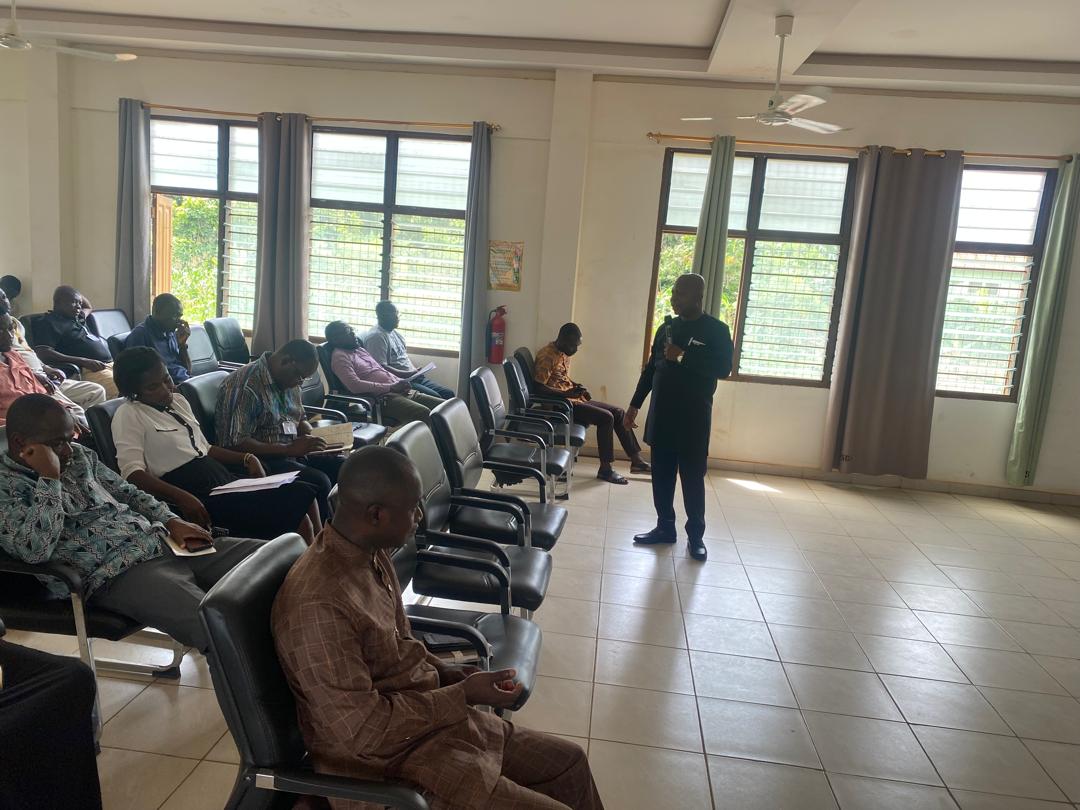
The Fanteakwa South District Assembly organized a Capacity Building Training session aimed at strengthening the skills and competencies of staff to enhance effective service delivery. The training formed part of the Assembly’s commitment to improving administrative efficiency, promoting professionalism, and ensuring that officers are well-equipped to execute their roles.
The main objectives were:
To improve staff understanding of key administrative processes and procedures.
To enhance knowledge on effective communication and teamwork.
To strengthen officers’ capacity in planning, reporting, and monitoring activities.
To equip staff with updated skills for efficient public service delivery.
To promote compliance with existing local government policies and regulations.
Participants
Participants included Heads of Departments/Units, Administrative Officers, MIS Officers, Finance and Planning staff, and other relevant personnel of the Assembly. The training was facilitated by resource persons from the Local Government Service and other invited experts.
Summary of Activities
The training covered both presentations and interactive sessions, including:
Modern approaches to administrative management
Effective communication and teamwork
Preparation of reports, memos, and official correspondence
Local government financial management procedures
Monitoring and evaluation practices
Ethics and professionalism in public service
Participants engaged in group discussions, case studies, and practical exercises aimed at strengthening their understanding of the topics presented.
Key Outcomes
Improved staff confidence in performing their duties.
Better appreciation of administrative procedures and documentation.
Enhanced collaboration among departments and units.
Strengthened knowledge in planning, reporting, and service delivery.
Increased commitment to professionalism and ethical conduct.
Challenges Identified
Some challenges raised during the discussions included:
Limited access to ICT tools and resources.
Need for regular refresher trainings.
Inadequate logistical support for some departments to fully implement new knowledge.
Recommendations
Continuous capacity building programmes should be organized quarterly.
The Assembly should provide the necessary logistics and ICT tools to enhance staff productivity.
Departments should adopt the best practices learned and integrate them into daily operations.
Follow-up monitoring should be conducted to assess the impact of the training.
Conclusion
The Capacity Building Training was successful and provided participants with valuable knowledge and practical skills necessary for effective service delivery. The Fanteakwa South District Assembly is encouraged to sustain such initiatives to ensure continuous improvement in the performance of its staff.